NICK NEIL’S: MEDIA TEXT INFORMATION SHEET
|
||||||||||||||
TITLE:
|
The Martian
|
YEAR OF PROD:
|
2015?
|
|||||||||||
TYPE:
|
FILM
Yes
|
TELEVISION
|
DOC.
|
MUSIC
|
ADVERT
|
MUSIC
VID.
|
OTHER:
|
|||||||
DIRECTOR
|
Ridley Scott
|
PRODUCER
|
Mark Huffam, Simon Kinberg, Ridley
Scott, Michael Schaefer
|
|||||||||||
WRITER
|
Drew Goddard (Screenplay)
Andy Weir (Book)
|
PRODUCTION COMPANY
|
Scott Free Productions
|
|||||||||||
KEY CAST
/ARTIST
|
Matt Damon, Jessica Chastain, Kristin
Wiig, Jeff Daniels, Michael Peña, Sean Bean, Chiwetel Ejiofor, Mackenzie
Davis
|
|||||||||||||
KEY CREW
|
Harry Gregson-Williams (Music),
Dariusz Wolski (Cinematography)
|
|||||||||||||
GENRE
|
Thriller, Drama
|
BUDGET
|
$108 million
|
BOX OFFICE
|
$50 Million (Opening Weekend)
|
|||||||||
THEMES
|
Loneliness, Space, Suspense,
|
|||||||||||||
AWARDS
|
TBC
|
|||||||||||||
NARRATIVE:
During a manned mission to Mars,
Astronaut Mark Watney is presumed dead after a fierce storm and left behind
by his crew. But Watney has survived and finds himself stranded and alone on
the hostile planet. With only meager supplies, he must draw upon his
ingenuity, wit and spirit to subsist and find a way to signal to Earth that
he is alive. Millions of miles away, NASA and a team of international
scientists work tirelessly to bring "the Martian" home, while his
crewmates concurrently plot a daring, if not impossible, rescue mission. As
these stories of incredible bravery unfold, the world comes together to root
for Watney's safe return. Based on a best-selling novel.
|
||||||||||||||
Sunday, 4 October 2015
The Martian: Info sheet

Friday, 2 October 2015
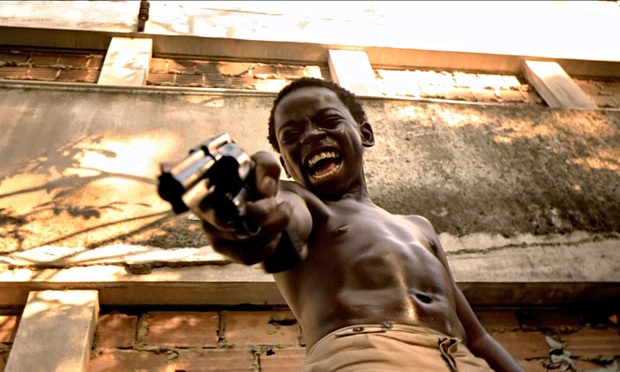
LA Haine, City of God Comparison


City of God is
a 2002 Brazilian crime drama film co-directed by Fernando Meirelles and Kátia
Lund. La Haine is a 1995 French black-and-white drama/suspense film written,
co-edited, and directed by Mathieu Kassovitz.
They both
follow disillusioned youth with the main themes following the crime and
violence that are ever present in their lives, they both feature an ethnically
diverse cast and portray the stories of Racism they face as a result of who
they are. City of God follows the story of Rocket and his life in the city of
god, he is a non-violent character but brushes with Violence daily due to where
he grows up, The City of God is a slum and has almost third world conditions,
this parallels to the suburbs of Paris where, although they are poor, they
still have adequate housing and running water.

This shows
that despite France being an established first world country it still can fall
victim to the same issues as a newly industrialised nation as brazil. The
violent nature of both these films highlight that their situation is a large
influence to this, as it gang culture seems to be a part of life where they
group up. Particularly in City of God, Rocket comes into contact with crime no
matter what he does. As a result of this he is used by the photography company
to capture the violence, not thinking about his safety and what might happen to
him as a result of capturing this underreported and more personal life within
the city of god.
The
cinematography in both films is great, LA Haine is shot in Black and white, a
deliberate choice by the director to show their drab concreate environment and
the dreariness of their situation. This contrast with City of God where it is
bright and colourful despite the dower colour pallet of the Favela, it acts as
a Juxtaposition the colourful aesthetic makes the dark subject matter look even
more out of place and is a clever device to use.
Although
both films are foreign language films the performances within them are
exceptional, the lack of understanding the languages does not lessen the impact
and there is frequent use of close ups to show the emotions on character’s
faces, which makes the lack of understandable dialogue less of an issue.
Monday, 21 September 2015
Layer Cake: Review

Layer Cake is
a 2004 British crime thriller film directed by Matthew Vaughn, in his
directorial debut. The screenplay was adapted by J. J. Connolly from his novel
of the same name. It stars Daniel Craig as “XXXX”, the anonymous protagonist of
the film, who is an established drug dealer; having routed himself in the
London criminal underground. On the surface the film looks exactly like any
other British Gangster movie, a popular sub-genre during the period of release
(2004), having to compete with such films as; “Snatch” and “Lock, Stock and Two
Smoking Barrels”. However it manages to set itself apart with key themes that
differ from traditional genre conventions, Craig’s character is not “East-End
Hard man” who would bash your head in for looking at him, his character abhors violence
and only does so to further his own agenda; his plan throughout the film is to
make a “Clean Mill” and retire.
Of course
this does not go over so swimmingly, causing the protagonist to have to dirty
his hands and clean up messes he did not make. What is interesting in the
marketing of the film is that it presents itself as the aforementioned, clichéd,
British Crime thriller in its advertisement. Showing Daniel Craig’s character
often holding the boss and looking like the leader of a crime syndicate. I
think this has to do with that this type of genre was very much the “Flavour of
the month” and although Layer Cake is different in many aspects it would like
to present itself like any other film to draw in audiences, this looks odd
having watched it eleven years on as it does do a competent job of
distinguishing itself from the similar films of that time.
In
conclusion, Layer Cake is a smart and much more grounded take on the popular “British
Gangster” movie, favouring clever plot devices and strong character development;
rather than Grandiose gun fights were the hero’s “Plot armour” is so thick that
they’re able to take down the rival gang all by themselves. Craig’s character
is very much portrayed as the smart, and business minded individual just attempting
to make money and move on. They even demonstrate the character weakness on many
occasions as he is often overpowered by stronger and more traditional genre
characters.
Monday, 7 September 2015
La Haine Analysis
The film is
made in 2005 and directed by Mathieu Kassovitz, it follows 24 hours in the
lives of three Parisian teenagers who come from a “Ghetto” in the French
suburbs. It shows their interactions with a Racist and oppressive police force,
after their friend Abdel is sent to hospital at the police’s hands a riot ensues.
This is the catalyst for the events to come as Vinz finds a police offers lost
gun and vows to “Kill a cop” should his friend die due to the beating he received
by the police. La Haine stands as a portrait of a broken social system and acts
as a social commentary to the events and the tension within France as a whole.
The story has two perspectives, although the three main characters are
criminals you can identify with their struggle due to the polices apparent
corruption, this makes Vinz vow to kill any cop seem more fair as by his
judgement the police treat them the same way, indiscriminately being aggressive
and violent toward them; he feels justified to treat them the same way.
The black
and white colour pallet of the film is clearly an artistic choice, a commentary
perhaps, to show the similarities between the boys as in this form skin colour
is less pronounced and shows that we are all the same at the root of it. In my
opinion the black and white doesn’t particularly enhance the film as it does
not allow me to appreciate the cinematography to a greater degree as one facet
of inspection is not present and makes it hard for me to compare similar shots
in other films to this one, colour for me is important as I feel it enhances a
film; which is why it is the more popularly chosen maiden for modern film. All
though with this film the colour is less necessary as it also tells of the dreary
grey and white cement buildings they live in.
There is
strong characterization throughout the film and this is ever present in the changing
of the character over time, once the shocking news report comes out about Abdel’s
death Vinz uses his murderous rage to confront a gang of Skinheads that have
attacked his friends. He hold a gun to one’s head and drags him down an alley,
the scene that follows shows how the character has evolved over the course of
the film. There is great emotional build up as the skinhead begs for his life,
the camera flicks between Vinz and the skinhead, their faces mirrored of each
other as they both are twisted with fear.
In
conclusion the film shows the broken system present within Paris, and leaves us
with the question of has it changed?
Tuesday, 16 June 2015
Headhunter Analysis
Headhunters Analysis
Headhunters is a 2012 Norwegian
film from director Mortum Tyldum. It is a story with themes of crime, espionage
and betrayal.
The film had an engaging
story with good characterisation on the part of the main protagonist and
antagonist. However despite these strong characters that the film was focused
around it fell overall rather flat in terms of back up characters with a few
exceptions.
There were no strong female
characters in the film and almost all of the supporting female cast were naked
at some point and were used as a conquest rather than a well thought out and
deep character that helps the story as it unfolds. This can be forgiven to some
extent by the main character in turmoil on behalf of his relationship with
woman. The opening line tells us of his insecurities about his height and how
he feels the need to buy his tall, model wife beautiful things.
This is due to his own belief
that she would not be happy with him if he was not a wealthy man, this is a
large plot point as this is partly what drives him to commit these crimes that
land him in trouble. What we later learn is that she wants nothing more than to
have children, something that he is not willing to provide her with as he feels
that she will no longer love him if they do have children. This is another
example of poor reflection of females within the film as the main character
assumes that she does not care for him and rather is with him for his wealth
and power.
The film also has themes of
comedy, this good as although it is not an outright action-comedy the subtle
nuances of the jokes help support the character and humanise what is
essentially a bad man who cheats on his wife, robs people. If it did not
portray him as the hapless victim the film would be a lot harder to relate to
the character as he is not all that likable. Doing all these things so he can
have money.
Although it is a foreign film
the acting covered what was missed in the subtleties of the dialogue, overall
the film was a strong experience and multi facetted in it’s themes and in some
regards defies genre conventions. Where it falls flat is the nature of it’s
supporting cast, none of them where particularly bad characters but were poorly
written and in large part where not necessary for the plot to procced.
Thursday, 16 April 2015
Film Production Companies

Working
Title films
Working
Title Films is a London Based, British film production company owned by
Universal Studios The Company was founded by Tim Bevan and Sarah Radclyffe in
1983.
Their most globally
recognised film perhaps is Billy Elliot which achieved worldwide fame in 2000
and was then later adapted to the stage due to its success.
They also
produce the popular Simon Pegg and Nick Frost movies such as Shaun of the Dead and
Hot Fuzz.

DNA Films
DNA Films is
a British film production company founded by Duncan Kenworthy and Andrew
Macdonald In 1997. They produce a number of primarily British films and have
had success with the thriller genre in particular
The Film
that has received the largest amount of praise is 2006’s ‘The last King of
Scotland’ which gained one of the lead actors Forrest Whitaker an Oscar. Some
other notable films include; 28 Days Later (2002), Love Actually (2003), Dredd
(2012).

Vertigo
Films
Vertigo
Films is a British film production and film distribution company based in
London, England. It was founded in 2002 by producers Alan Niblo and James
Richardson.
They are
most known for the Film Street Dance 3D, which was release in 2010. The
majority of Their films are British Based.
Thursday, 9 April 2015
Differences in Production Between Quentin Tarantino & Spike Lee


Title: Miracle at St. Anna
|
Director: Spike Lee
|
Writer: James McBride
|
Producer: Spike Lee
|
Production Company: 40 Acres and a Mule
|
Budget: £30,226,701
|
Box Office: £5,319,291
|
Year: 2008
|
Title: Inglorious Bastards
|
Director: Quentin Tarantino, Eli Roth (
Uncredited)
|
Writer: Quentin Tarantino
|
Producer: Lawrence Bender
|
Production Company: A Band Apart, Studio
Babelsberg
|
Budget: £50,395,944
|
Box Office: £80,988,253
|
Year: 2009
|
Quentin
Tarantino is most likely a wider known director in modern Hollywood and as such
his movies are likely to receive more funding and as a result they appear to
make more money, Tarantino has had widespread commercial successes with his
films despite their odd presentation.
The subject
matter of Tarantino’s films, often appeal to the dominant ideology and as such
are likely to attract a larger amount of people based upon this. In contrast to
this Spike lee’s films often go against what is normally commercially successful,
the majority of his films are from a black point of view and as such gain less
global attraction as less people feel that they can relate to the piece.
This is
shown by Miracle at St. Anna as despite its £30m budget it only made a fraction
of that. This can possibly be attributed to the subject matter of a World War 2
film set from the perspective of black Americans, or other factors including
Lee’s beef with the film industry as a whole and poor critic reviews which
meant people were less likely to go and see it.
Quentin Tarantino
is also an Oscar winner which furthers his fame brining him into the public eye.
As we can
see from the table the budgets of the two films were not that different yet
Tarantino managed to almost double the budget, and win an academy award for the
piece.
In all
Quentin Tarantino and Spike lee are similar directors in that they have unique
ideas of filming and screenplays. How they differ is that Tarantino has the
support of the film industry as a whole and also makes more globally likeable
films in contrast to Lee.
Subscribe to:
Posts (Atom)